Cross-border payment gateway for Shopify
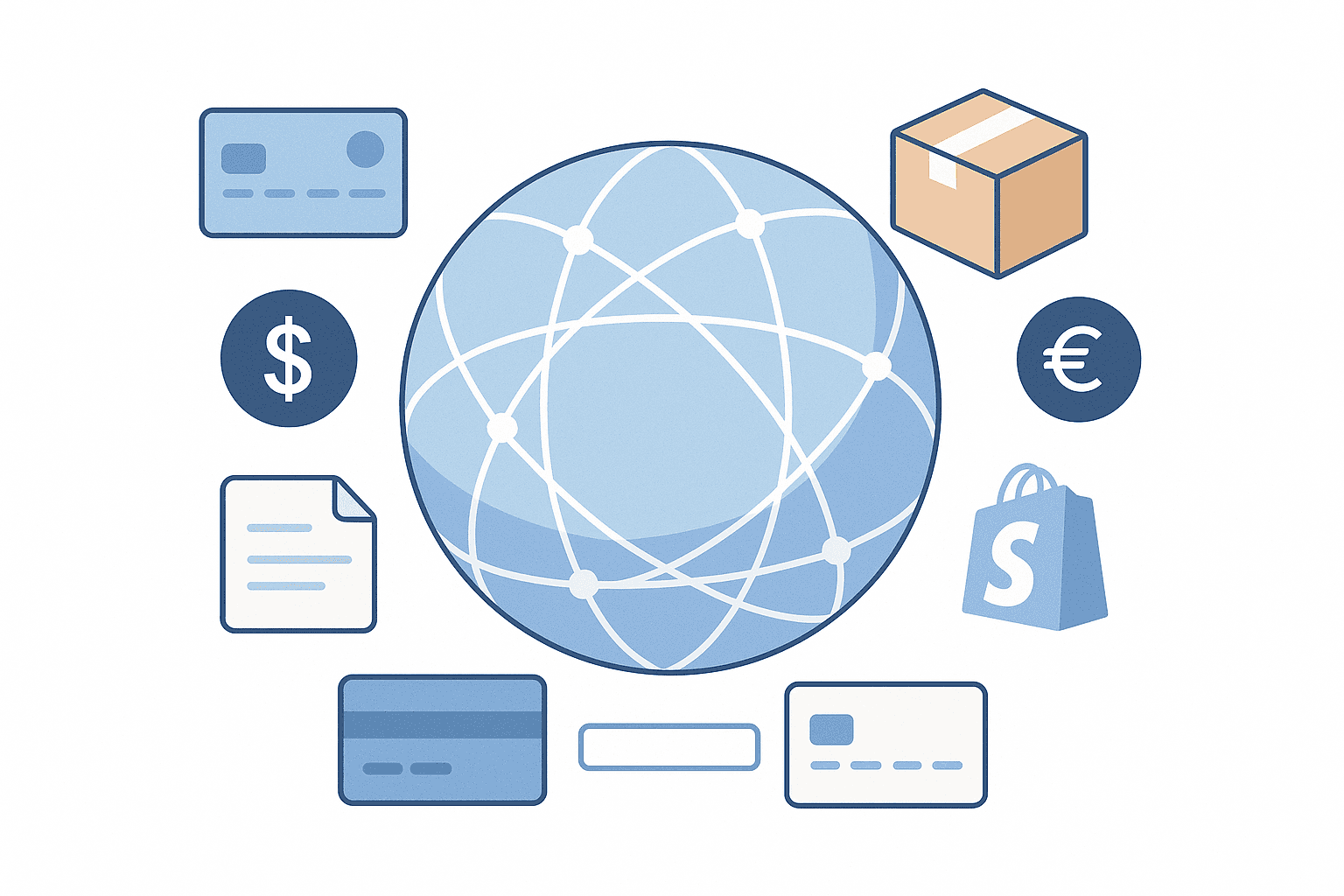
A cross-border payment gateway localizes checkout by pricing in local currency, offering familiar payment methods, and calculating duties and taxes upfront. This reduces friction and payment failures, raises authorization rates, and increases checkout conversion across countries. It also centralizes compliance, fraud controls, and payout management while coordinating international or regional fulfillment. Shoppers see transparent totals and trusted ways to pay, improving confidence and completion rates without requiring separate foreign entities.

Explanation / Context

International selling traditionally required local entities, warehouses, and tax registrations. These requirements created high upfront costs and slowed expansion.

Modern cross-border infrastructure removes these barriers by centralizing payments, compliance, and logistics.

How It Works

  1. Integrate a cross-border platform

  2. Localize pricing, currency, and payment methods

  3. Calculate duties and taxes at checkout

  4. Fulfill orders using international or regional logistics partners

  5. Track orders and payouts centrally

Real-World Examples

A DTC brand launches in the UAE, UK, and EU within weeks. Customers pay in local currency using local payment methods and receive orders in 2–4 days.

Common Mistakes

  • Relying only on international card payments

  • Using DDU shipping

  • Launching without demand testing

Why This Matters for eCommerce Brands

Proper localization increases conversion rates, reduces payment failures, and improves customer trust.

How SellAbroad Solves This

SellAbroad provides unified infrastructure for cross-border selling, including localized checkout, local payment methods, duty-inclusive shipping, and centralized order management. Brands use SellAbroad to launch and scale internationally while operating from a single legal entity.

Explanation / Context

International selling traditionally required local entities, warehouses, and tax registrations. These requirements created high upfront costs and slowed expansion.

Modern cross-border infrastructure removes these barriers by centralizing payments, compliance, and logistics.

How It Works

  1. Integrate a cross-border platform

  2. Localize pricing, currency, and payment methods

  3. Calculate duties and taxes at checkout

  4. Fulfill orders using international or regional logistics partners

  5. Track orders and payouts centrally

Real-World Examples

A DTC brand launches in the UAE, UK, and EU within weeks. Customers pay in local currency using local payment methods and receive orders in 2–4 days.

Common Mistakes

  • Relying only on international card payments

  • Using DDU shipping

  • Launching without demand testing

Why This Matters for eCommerce Brands

Proper localization increases conversion rates, reduces payment failures, and improves customer trust.

How SellAbroad Solves This

SellAbroad provides unified infrastructure for cross-border selling, including localized checkout, local payment methods, duty-inclusive shipping, and centralized order management. Brands use SellAbroad to launch and scale internationally while operating from a single legal entity.

FAQ

### Do I need foreign entities to sell internationally?

No. Modern cross-border setups let you centralize payments, tax handling, and logistics under one entity while localizing checkout experiences per market.

### Will familiar local payment methods actually improve checkout conversion?

Yes. Offering the dominant payment options in each country reduces friction and soft declines, raising authorization rates and completion, especially on mobile and high-risk transactions.

### How should prices, duties, and taxes be shown at checkout?

Display local currency with real-time duties and taxes included before payment. Clear landed costs prevent delivery-time surprises and lower abandonment and support escalations.

### How can I test and optimize my cross-border payment mix?

Launch with a minimal set of top local methods, track approval and drop-off by method, then iterate on routing, 3DS rules, and fraud thresholds by country.
