Global expansion without hiring local teams
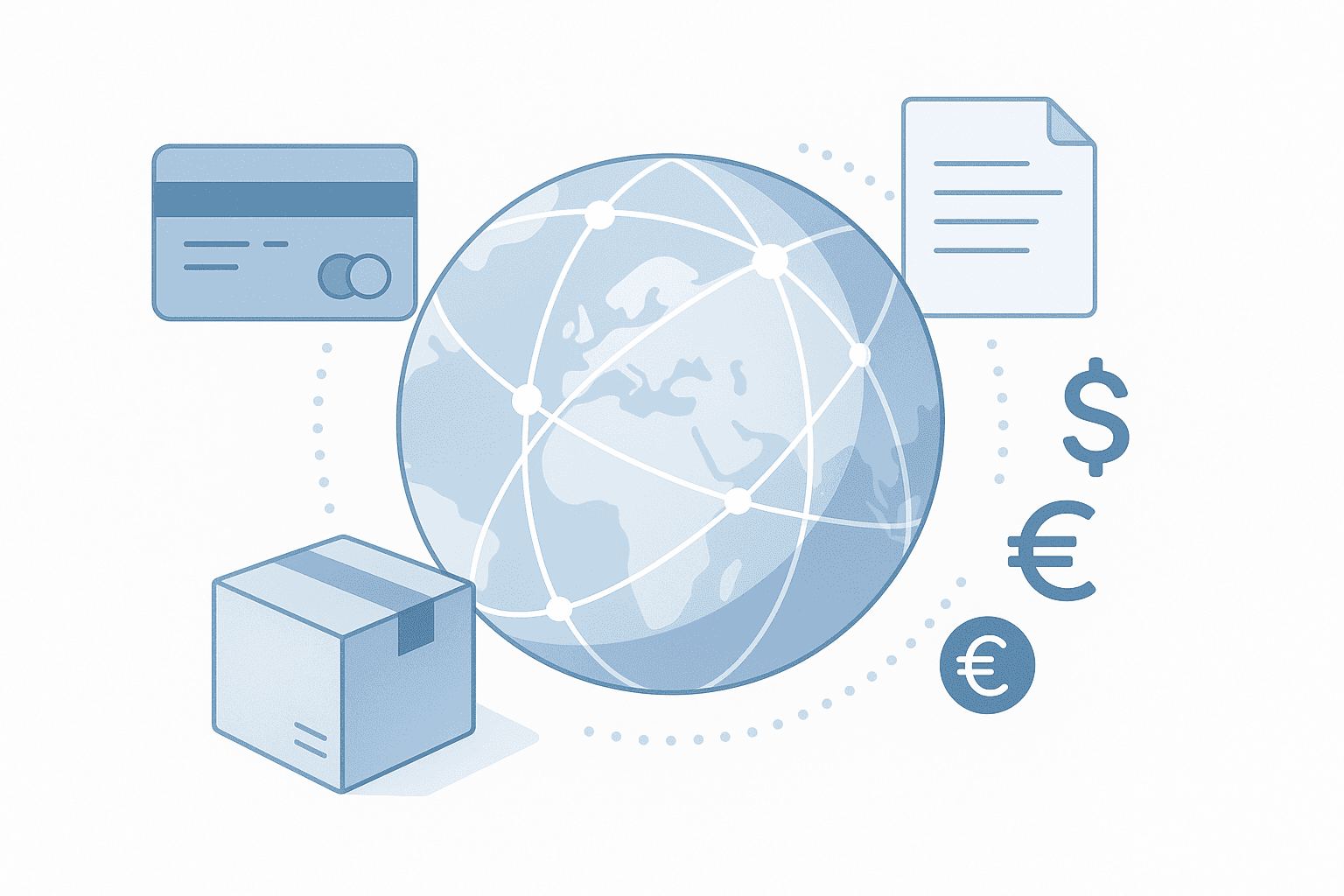
Global expansion without hiring local teams is achieved by deploying a centralized cross-border infrastructure that unifies payments, logistics, tax calculation, compliance, and reporting. Country-specific rules are encoded once and applied automatically, eliminating duplicate stacks and manual handoffs. Consolidated order, payout, and performance data streamlines reconciliation and governance while improving regional visibility. This simplified operating layer accelerates market launches, reduces vendor sprawl and headcount growth, and maintains consistent workflows across countries with lower risk and controllable costs.

Explanation / Context

Global expansion often leads brands to add new tools, teams, and workflows for each country. Over time, this creates operational sprawl.

A centralized global eCommerce stack replaces fragmented systems with a single operating layer.

How It Works

  1. Use one integration for payments, logistics, and taxes

  2. Apply country-specific rules automatically

  3. Centralize order, payout, and performance data

  4. Scale into new markets without adding new vendors

  5. Monitor performance by region from one dashboard

Real-World Examples

A DTC brand expands from 3 to 12 countries without hiring local teams by consolidating payments, shipping, and compliance into one platform.

Common Mistakes

  • Adding tools market by market

  • Hiring local teams too early

  • Lacking country-level visibility

Why This Matters for Scaling Brands

Centralization lowers operational costs, reduces risk, and improves decision-making speed.

How SellAbroad Solves This

SellAbroad provides a unified infrastructure for cross-border eCommerce, combining payments, shipping, tax handling, and reporting into one system. Brands use SellAbroad to scale internationally without increasing headcount or operational complexity.

Explanation / Context

Global expansion often leads brands to add new tools, teams, and workflows for each country. Over time, this creates operational sprawl.

A centralized global eCommerce stack replaces fragmented systems with a single operating layer.

How It Works

  1. Use one integration for payments, logistics, and taxes

  2. Apply country-specific rules automatically

  3. Centralize order, payout, and performance data

  4. Scale into new markets without adding new vendors

  5. Monitor performance by region from one dashboard

Real-World Examples

A DTC brand expands from 3 to 12 countries without hiring local teams by consolidating payments, shipping, and compliance into one platform.

Common Mistakes

  • Adding tools market by market

  • Hiring local teams too early

  • Lacking country-level visibility

Why This Matters for Scaling Brands

Centralization lowers operational costs, reduces risk, and improves decision-making speed.

How SellAbroad Solves This

SellAbroad provides a unified infrastructure for cross-border eCommerce, combining payments, shipping, tax handling, and reporting into one system. Brands use SellAbroad to scale internationally without increasing headcount or operational complexity.

FAQ

### What makes a cross-border operating layer different from a country-by-country stack?

It centralizes payments, logistics, tax, compliance, and reporting behind one integration, with country-specific rules configured per market. A single data model and dashboard reduce interfaces, automate reconciliation, and enforce consistent policies, eliminating multiple vendors and manual handoffs.

### Do I still need local teams for compliance and logistics?

Not initially. Automated rule engines handle tax calculation, duties, customs documentation, shipping labels, return flows, fraud controls, and reporting across countries. You can add selective local roles later for partnerships, customer research, or language nuance.

### Will centralization limit localization of prices, taxes, and shipping options?

No. You can set per-country pricing, currency, tax rules, duty treatment, carrier selections, and service levels through configuration. Policies can be overridden without rebuilding separate stacks, preserving flexibility while operating from one system.

### What data should be unified to run cross-border operations efficiently?

Unify orders, payouts, refunds, chargebacks, tax and duty liabilities, shipping events, FX rates, and performance metrics. Consolidation simplifies reconciliation, accelerates close processes, improves forecasting, and strengthens regional visibility and governance.
