How to handle taxes at checkout for international orders
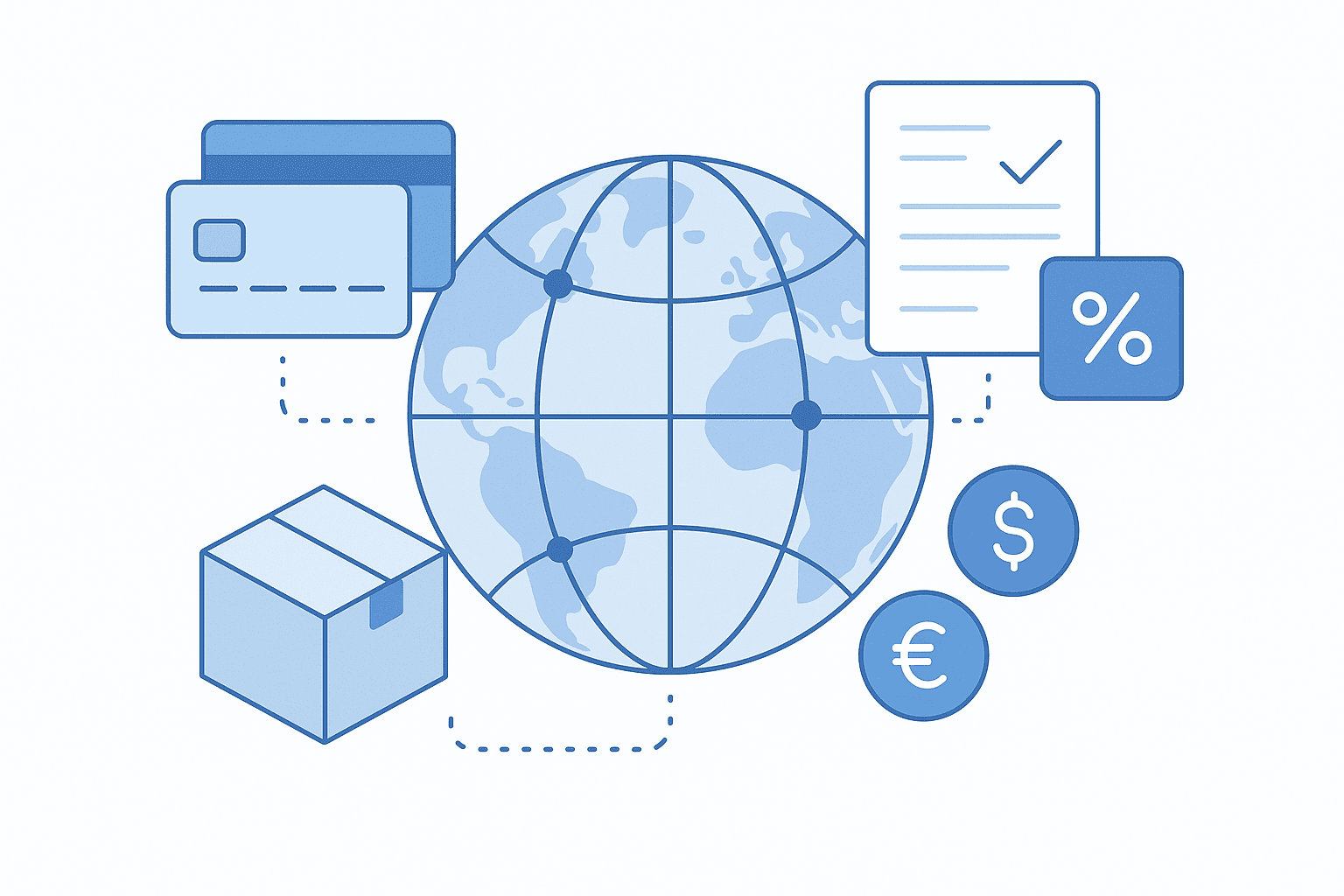
Handle taxes for international checkout by calculating destination VAT/GST and duties in real time, then displaying a single landed cost in the shopper’s local currency before payment. Collect required taxes at checkout and enable Delivered Duty Paid to avoid delivery surprises. Offer familiar, country-specific payment methods to increase trust and conversion. Generate tax-compliant invoices and retain location and transaction evidence. Maintain current rates, thresholds, and registrations to ensure compliance and minimize cart abandonment.

Explanation / Context

International checkout introduces more decision points than domestic checkout. Customers face currency conversion, unfamiliar payment flows, and unclear tax treatment.

When these elements are not localized, abandonment increases sharply.

How It Works

  1. Detect customer location

  2. Display prices in local currency

  3. Offer country-specific payment methods

  4. Show duties and taxes before payment

  5. Confirm delivery timelines upfront

Real-World Examples

A brand adds local currency and BNPL options for Middle East customers and reduces checkout abandonment by over 25%.

Common Mistakes

  • Showing prices only in USD

  • Hiding taxes until delivery

  • Relying only on card payments

Why This Matters for eCommerce Brands

Checkout optimization directly impacts conversion, CAC efficiency, and international LTV.

How SellAbroad Solves This

SellAbroad enables localized international checkout by supporting local currencies, regional payment methods, duty-inclusive pricing, and tax compliance in one system. Brands use SellAbroad to reduce abandonment and improve international conversion.

Explanation / Context

International checkout introduces more decision points than domestic checkout. Customers face currency conversion, unfamiliar payment flows, and unclear tax treatment.

When these elements are not localized, abandonment increases sharply.

How It Works

  1. Detect customer location

  2. Display prices in local currency

  3. Offer country-specific payment methods

  4. Show duties and taxes before payment

  5. Confirm delivery timelines upfront

Real-World Examples

A brand adds local currency and BNPL options for Middle East customers and reduces checkout abandonment by over 25%.

Common Mistakes

  • Showing prices only in USD

  • Hiding taxes until delivery

  • Relying only on card payments

Why This Matters for eCommerce Brands

Checkout optimization directly impacts conversion, CAC efficiency, and international LTV.

How SellAbroad Solves This

SellAbroad enables localized international checkout by supporting local currencies, regional payment methods, duty-inclusive pricing, and tax compliance in one system. Brands use SellAbroad to reduce abandonment and improve international conversion.

FAQ

### How does showing taxes upfront affect checkout conversion for international shoppers?

Displaying taxes and duties as a single landed cost reduces uncertainty, increases trust, and lowers abandonment. Pairing this with familiar local payment methods improves completion and authorization rates.

### When am I required to collect VAT/GST at checkout?

You must collect when the destination requires registration, thresholds are met, or schemes mandate pre-collection. If not required, disclose estimates clearly and indicate any charges due on delivery.

### What is the difference between DDP and DAP for international checkout?

DDP includes taxes and duties paid at checkout, preventing delivery charges and delays. DAP leaves taxes and duties for the buyer to pay on delivery, increasing risk of refusals.

### How do local payment methods influence tax collection success?

Offering familiar, country-specific payment methods increases payment acceptance and buyer confidence, enabling reliable tax capture at checkout and reducing drop-off caused by unfamiliar flows.
