How to monitor international performance by country
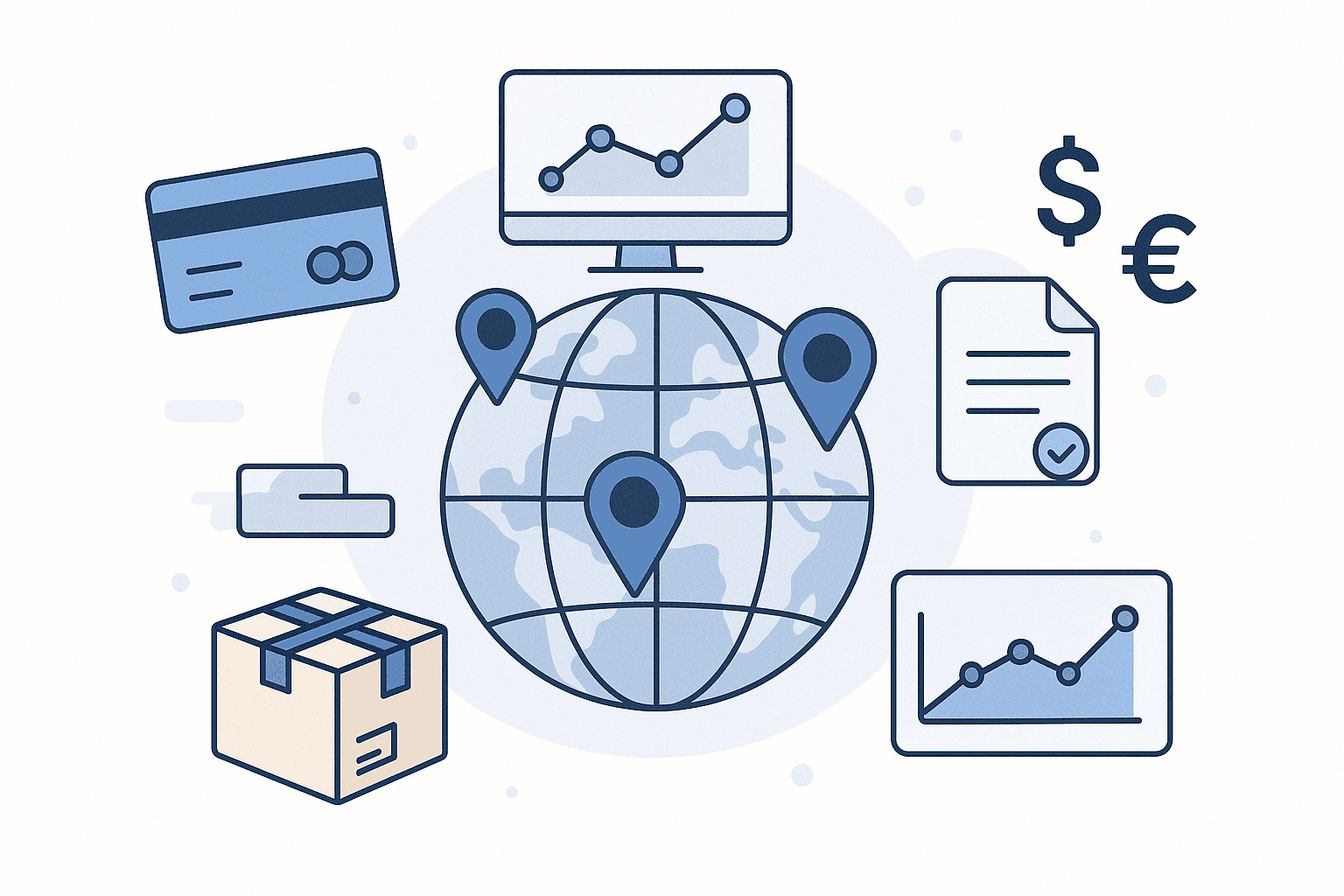
Implement a unified cross-border infrastructure that consolidates payments, logistics, taxes, and marketing data into a standardized model with consistent currency conversion and metric definitions. Apply automated country-specific rules, normalize duties, taxes, and discounts, and calculate comparable KPIs such as revenue, margin, conversion, CAC, AOV, fulfillment time, and refunds. Use a single dashboard with country filters, per-country targets, and anomaly alerts. Refresh data frequently and log operational changes to preserve comparability over time.

Explanation / Context

Global expansion often leads brands to add new tools, teams, and workflows for each country. Over time, this creates operational sprawl.

A centralized global eCommerce stack replaces fragmented systems with a single operating layer.

How It Works

  1. Use one integration for payments, logistics, and taxes

  2. Apply country-specific rules automatically

  3. Centralize order, payout, and performance data

  4. Scale into new markets without adding new vendors

  5. Monitor performance by region from one dashboard

Real-World Examples

A DTC brand expands from 3 to 12 countries without hiring local teams by consolidating payments, shipping, and compliance into one platform.

Common Mistakes

  • Adding tools market by market

  • Hiring local teams too early

  • Lacking country-level visibility

Why This Matters for Scaling Brands

Centralization lowers operational costs, reduces risk, and improves decision-making speed.

How SellAbroad Solves This

SellAbroad provides a unified infrastructure for cross-border eCommerce, combining payments, shipping, tax handling, and reporting into one system. Brands use SellAbroad to scale internationally without increasing headcount or operational complexity.

Explanation / Context

Global expansion often leads brands to add new tools, teams, and workflows for each country. Over time, this creates operational sprawl.

A centralized global eCommerce stack replaces fragmented systems with a single operating layer.

How It Works

  1. Use one integration for payments, logistics, and taxes

  2. Apply country-specific rules automatically

  3. Centralize order, payout, and performance data

  4. Scale into new markets without adding new vendors

  5. Monitor performance by region from one dashboard

Real-World Examples

A DTC brand expands from 3 to 12 countries without hiring local teams by consolidating payments, shipping, and compliance into one platform.

Common Mistakes

  • Adding tools market by market

  • Hiring local teams too early

  • Lacking country-level visibility

Why This Matters for Scaling Brands

Centralization lowers operational costs, reduces risk, and improves decision-making speed.

How SellAbroad Solves This

SellAbroad provides a unified infrastructure for cross-border eCommerce, combining payments, shipping, tax handling, and reporting into one system. Brands use SellAbroad to scale internationally without increasing headcount or operational complexity.

FAQ

### How does a unified cross-border infrastructure simplify monitoring by country?

It centralizes payments, logistics, and tax data into one schema, applies country rules automatically, and exposes standardized KPIs in a single dashboard, enabling consistent comparisons and faster variance detection.

### What KPIs should I track per country?

Track revenue, contribution margin after duties and taxes, conversion rate, AOV, CAC or ROAS, repeat purchase rate, fulfillment time, and refund or cancellation rates, using identical definitions.

### How should I handle currency conversion and taxes for fair comparisons?

Convert to a base currency using a consistent rate policy at a defined timestamp, exclude consumption taxes from margin, and standardize discount and shipping treatments across markets.

### How often should I refresh dashboards and alerts for country performance?

Update operational metrics daily and financials weekly with monthly close reconciliation; align reviews to campaign cycles and seasonality, and set threshold-based alerts for deviations.
