How to sell online in the UAE without a local company
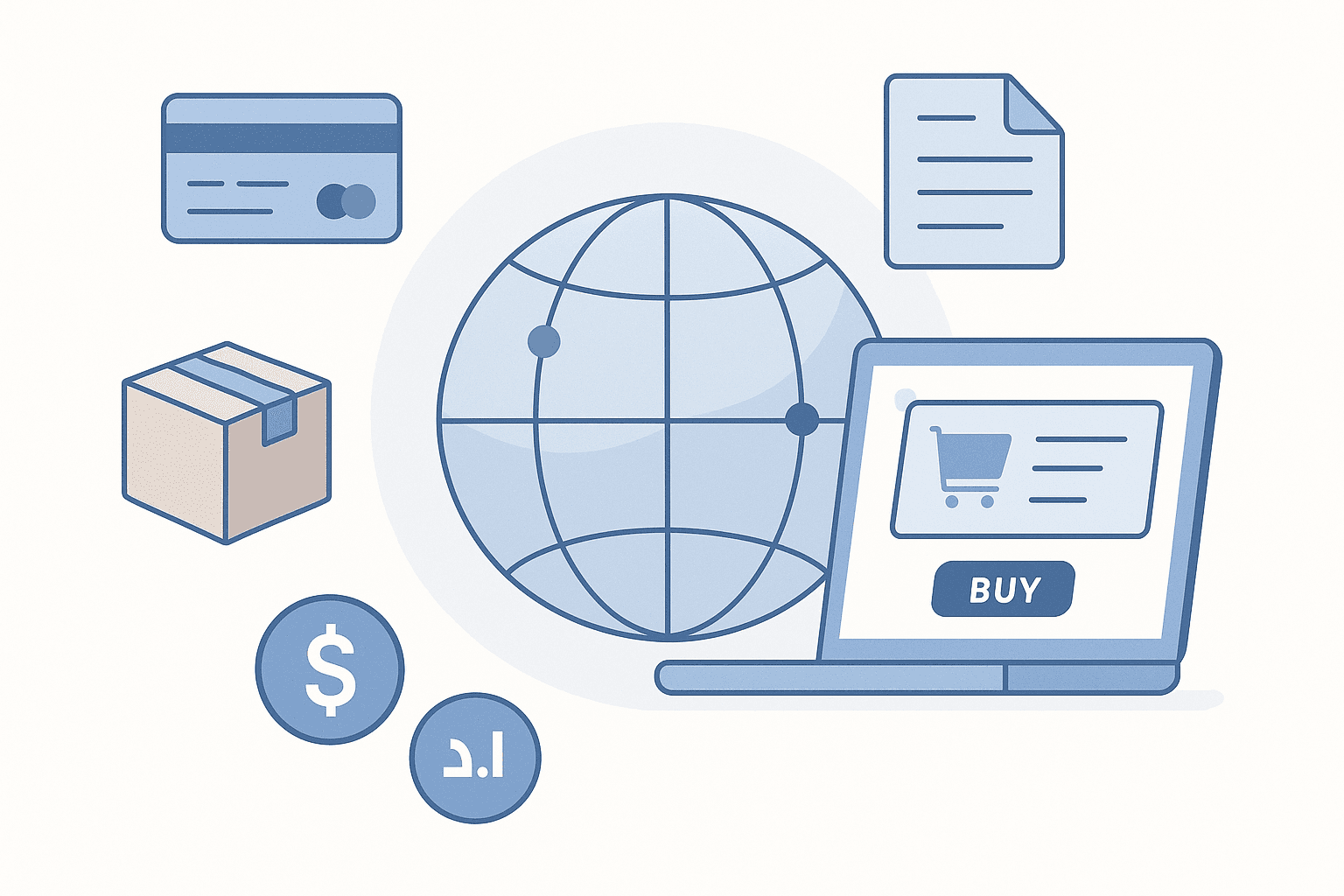
Sell cross-border into the UAE by enabling regional market capabilities without forming a local entity. Offer AED pricing, Arabic and English support, and region‑preferred payments, including wallets and installments. Align checkout fields and address formats to local conventions, and tune risk, 3DS, and routing for UAE issuers. Monitor approval, authentication, and refund metrics by country, then iterate. Centralize operations while localizing buyer experience to increase trust, reduce declines, and improve conversion.

Explanation / Context

International expansion is not only about shipping products. Payment behavior, language, and trust signals vary significantly by region.

Markets like the Middle East have unique preferences that differ from Western markets.

How It Works

  1. Identify target countries and payment preferences

  2. Enable local payment methods per market

  3. Localize language and currency

  4. Adapt checkout UX to regional norms

  5. Monitor payment success rates by country

Real-World Examples

Brands entering the UAE and Saudi Arabia see higher conversion after adding BNPL options like Tabby and Tamara.

Common Mistakes

  • Using card-only checkout

  • Ignoring local language support

  • Assuming one payment setup fits all markets

Why This Matters for Global Brands

Payment localization directly impacts approval rates, conversion, and customer trust.

How SellAbroad Solves This

SellAbroad supports region-specific payment methods, localized checkout, and centralized payment orchestration. Brands use SellAbroad to expand into markets like MENA while managing payments and operations from one platform.

Explanation / Context

International expansion is not only about shipping products. Payment behavior, language, and trust signals vary significantly by region.

Markets like the Middle East have unique preferences that differ from Western markets.

How It Works

  1. Identify target countries and payment preferences

  2. Enable local payment methods per market

  3. Localize language and currency

  4. Adapt checkout UX to regional norms

  5. Monitor payment success rates by country

Real-World Examples

Brands entering the UAE and Saudi Arabia see higher conversion after adding BNPL options like Tabby and Tamara.

Common Mistakes

  • Using card-only checkout

  • Ignoring local language support

  • Assuming one payment setup fits all markets

Why This Matters for Global Brands

Payment localization directly impacts approval rates, conversion, and customer trust.

How SellAbroad Solves This

SellAbroad supports region-specific payment methods, localized checkout, and centralized payment orchestration. Brands use SellAbroad to expand into markets like MENA while managing payments and operations from one platform.

FAQ

### Do I need a local company to sell online in the UAE?

No. You can sell cross‑border by localizing payments, AED pricing, language, and checkout, while handling shipping, customs, and customer support from your home base.

### How do I enable regional payment methods for UAE shoppers?

Support AED card payments with 3DS, regional wallets, and installments. Use providers with UAE issuer coverage, configure risk and routing per country, and test declines, retries, and refunds.

### What metrics show my UAE localization is working?

Track authorization approval rate, 3DS challenge rate, checkout completion rate, decline codes by issuer, chargeback ratio, refund time, and payment mix, segmented by country and method.

### Do I have to register for UAE VAT when selling cross‑border?

Requirements depend on your activities and thresholds. Many cross‑border sales involve import VAT collected at customs, but remote sellers may need registration in some cases. Verify current regulations.
