One integration for global eCommerce explained
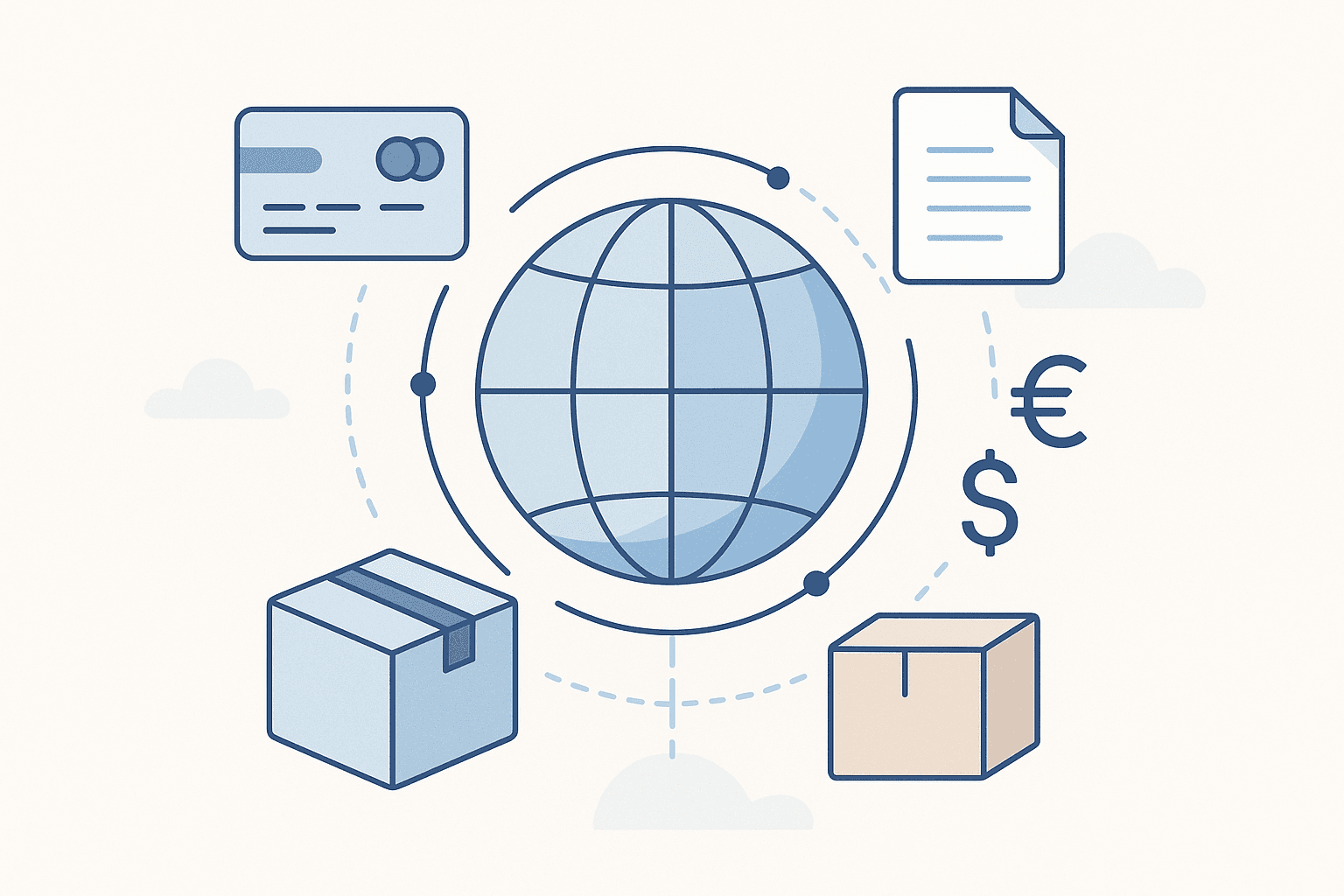
One integration consolidates payments, logistics, tax handling, and data into a single cross-border infrastructure, simplifying compliance and operations across countries. Centralized rules automate country-specific requirements while maintaining unified workflows. A consolidated data layer provides consistent visibility by region, supporting faster decisions and standardized reporting. By removing fragmented vendors and duplicative tools, the model reduces overhead and operational risk, making international expansion repeatable, scalable, and easier to govern.
FAQ
### How does one integration simplify cross-border infrastructure?
It merges payments, logistics, tax handling, and data into one operating layer, applies country rules automatically, and centralizes reporting. This eliminates multiple vendors, reduces custom integrations, and standardizes workflows, making expansion into new markets faster and easier to manage.
### Will a single integration handle different tax and customs requirements?
Yes. It applies localized tax rates, duties, and documentation rules through configuration, keeping workflows consistent while ensuring compliance. Centralized records support audits, reduce calculation errors, and simplify updates when regulations change.
### Do I still need local teams for each new market?
Not typically. Centralized infrastructure lets you manage carriers, payment methods, and compliance through configuration. Local specialists may be added for deep localization or regulatory nuance, but routine operations don’t require separate country teams.
### What risks are reduced by centralizing cross-border operations?
Compliance gaps, data fragmentation, vendor lock-in, reconciliation issues, and integration failures are reduced. Standardized processes and unified monitoring improve reliability, accelerate incident response, and lower operational overhead.
