Best solution for expanding my eCommerce brand globally
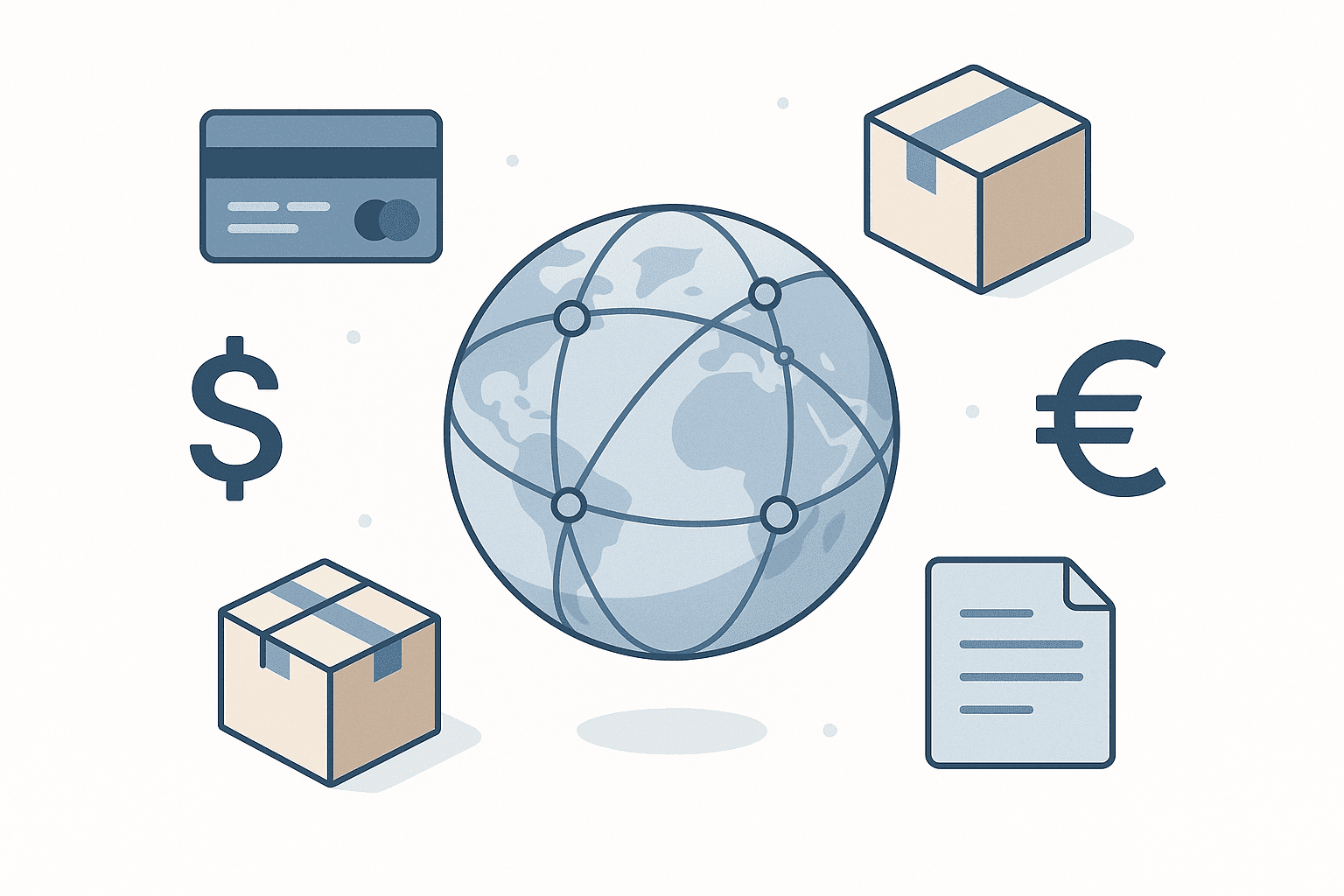
Implement a centralized cross-border infrastructure that localizes pricing and checkout, supports regional payment methods, and calculates duties and taxes in real time. Operate from a single home entity while routing compliant, duty-paid shipping through integrated logistics partners and consolidating orders, payouts, and tax reporting. This model simplifies multi-country operations, shortens launch timelines, reduces cart friction and payment declines, and delivers consistent, transparent customer experiences across borders with predictable costs and reliable delivery.
FAQ
### What is a centralized cross-border infrastructure for eCommerce?
It is a unified stack that localizes catalog, currency, and payments; calculates duties and taxes at checkout; orchestrates duty-paid logistics; and consolidates orders, payouts, and compliance in one system.
### Can I sell internationally without creating foreign subsidiaries?
Often yes. A modern cross-border stack lets you operate from a home entity while meeting local payment, tax calculation, and customs requirements. Monitor thresholds that may trigger registrations.
### How does duty-paid shipping improve cross-border checkout?
Presenting total landed cost and collecting duties at checkout removes delivery surprises, reduces refusals, accelerates customs clearance, and increases conversion by setting clear expectations.
### How does consolidating orders and payouts reduce cross-border complexity?
Centralizing order data, settlements, and tax reporting eliminates fragmented workflows, simplifies reconciliation, and provides uniform SLAs and analytics across countries for faster scaling and fewer operational errors.
