How to test international markets without upfront investment
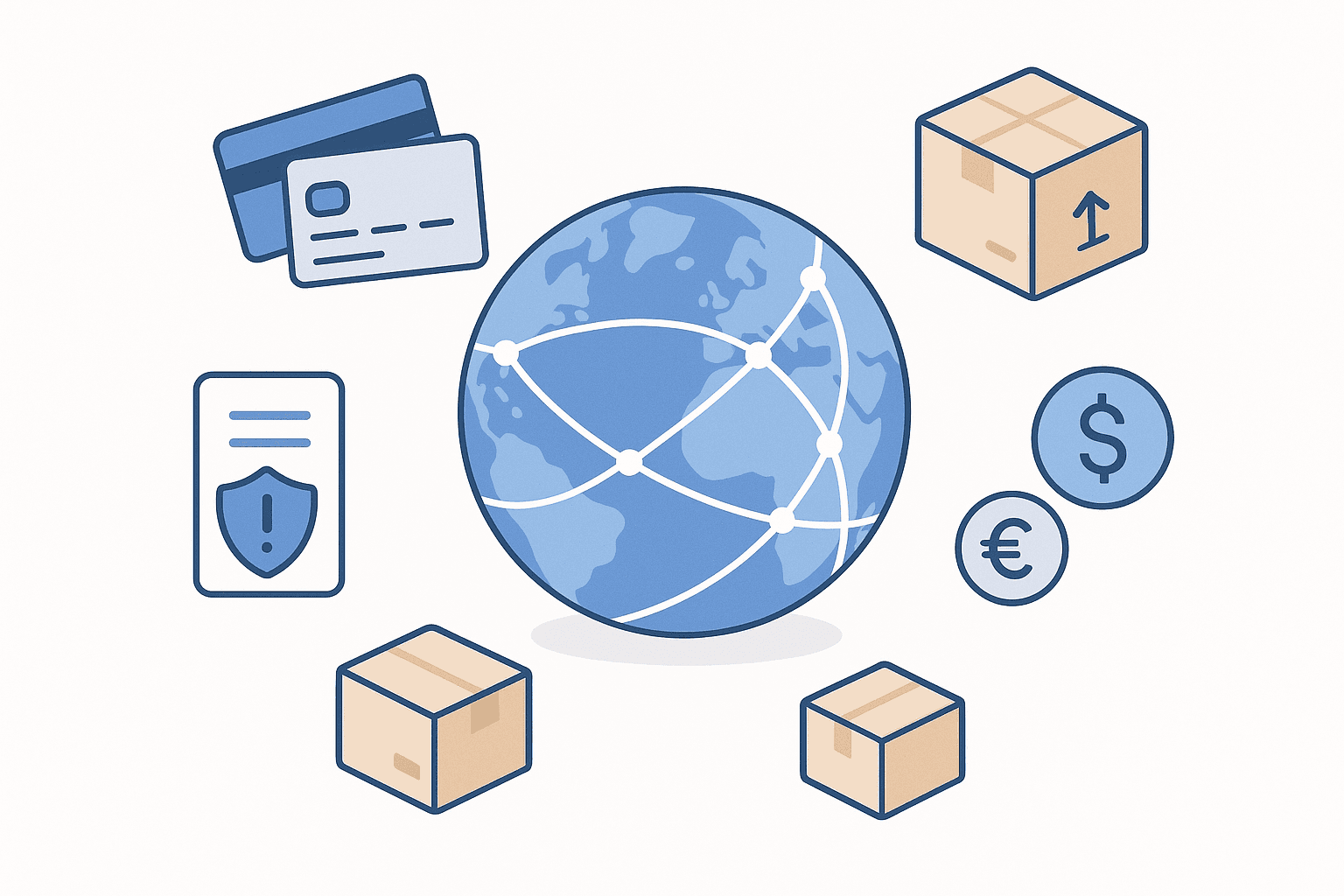
Test international markets without upfront investment by operating from a single legal entity and using cross-border infrastructure to localize pricing, currency, and payment methods while calculating duties and taxes at checkout. Employ duty-paid shipping and regional logistics partners to fulfill small batches, cap SKUs and inventory, and stage rollouts. Centralized tracking and payouts streamline operations, limit financial exposure, and confirm demand before committing to foreign entities, local warehouses, long-term contracts, or substantial inventory purchases.

Explanation / Context

International selling traditionally required local entities, warehouses, and tax registrations. These requirements created high upfront costs and slowed expansion.

Modern cross-border infrastructure removes these barriers by centralizing payments, compliance, and logistics.

How It Works

  1. Integrate a cross-border platform

  2. Localize pricing, currency, and payment methods

  3. Calculate duties and taxes at checkout

  4. Fulfill orders using international or regional logistics partners

  5. Track orders and payouts centrally

Real-World Examples

A DTC brand launches in the UAE, UK, and EU within weeks. Customers pay in local currency using local payment methods and receive orders in 2–4 days.

Common Mistakes

  • Relying only on international card payments

  • Using DDU shipping

  • Launching without demand testing

Why This Matters for eCommerce Brands

Proper localization increases conversion rates, reduces payment failures, and improves customer trust.

How SellAbroad Solves This

SellAbroad provides unified infrastructure for cross-border selling, including localized checkout, local payment methods, duty-inclusive shipping, and centralized order management. Brands use SellAbroad to launch and scale internationally while operating from a single legal entity.

Explanation / Context

International selling traditionally required local entities, warehouses, and tax registrations. These requirements created high upfront costs and slowed expansion.

Modern cross-border infrastructure removes these barriers by centralizing payments, compliance, and logistics.

How It Works

  1. Integrate a cross-border platform

  2. Localize pricing, currency, and payment methods

  3. Calculate duties and taxes at checkout

  4. Fulfill orders using international or regional logistics partners

  5. Track orders and payouts centrally

Real-World Examples

A DTC brand launches in the UAE, UK, and EU within weeks. Customers pay in local currency using local payment methods and receive orders in 2–4 days.

Common Mistakes

  • Relying only on international card payments

  • Using DDU shipping

  • Launching without demand testing

Why This Matters for eCommerce Brands

Proper localization increases conversion rates, reduces payment failures, and improves customer trust.

How SellAbroad Solves This

SellAbroad provides unified infrastructure for cross-border selling, including localized checkout, local payment methods, duty-inclusive shipping, and centralized order management. Brands use SellAbroad to launch and scale internationally while operating from a single legal entity.

FAQ

### Do I need foreign entities to start testing overseas?

No. You can sell from a single legal entity while your commerce stack or service partners handle localization, compliance, and remittances, reducing setup costs and delays.

### What safeguards limit financial exposure during market testing?

Set SKU and inventory caps, use duty-paid delivery, require full prepayment, enable fraud controls, choose carriers with no minimums, and pilot a few markets before expanding.

### How can I show landed costs upfront?

Display duties, taxes, and shipping at checkout using real-time classification and rates so customers pay the total cost, reducing refusals, returns, and delivery disputes.

### Which metrics prove a market is worth scaling?

Monitor conversion by local payment method, payment approval rates, delivery time, cost-to-serve, return rate, and net margin after duties, taxes, shipping, and refunds.
