How to offer fast delivery for international customers
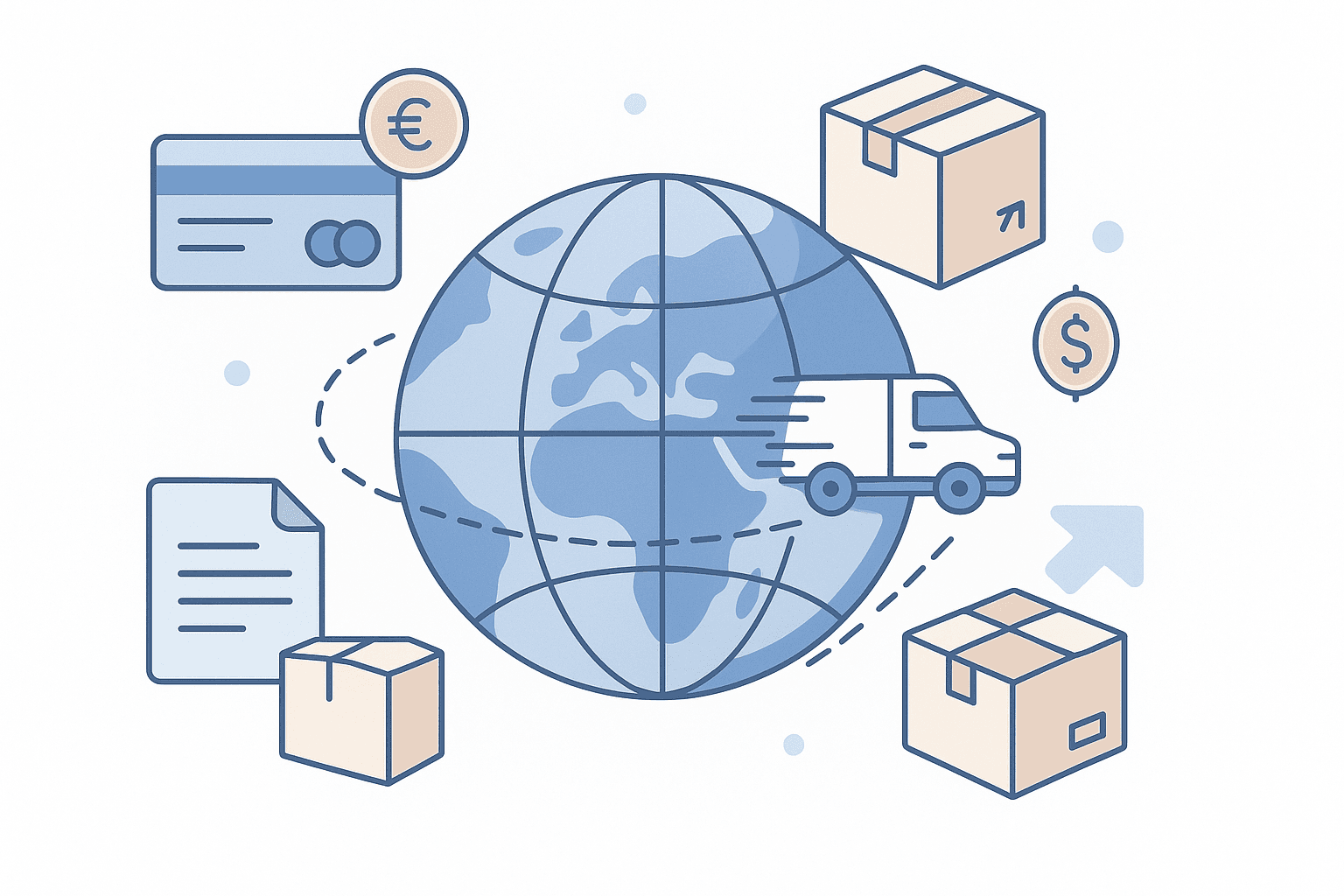
Offer fast, predictable international delivery by localizing checkout and payments, calculating duties and taxes upfront, and shipping duty-paid to prevent customs holds. Contract carriers with service-level guarantees and route orders from the closest viable node. Centralize inventory visibility and order management to select fastest lanes automatically. Display transparent landed costs and precise delivery windows at checkout, provide end‑to‑end tracking and proactive updates, and monitor carrier performance to continually optimize transit times and reliability.

Explanation / Context

International selling traditionally required local entities, warehouses, and tax registrations. These requirements created high upfront costs and slowed expansion.

Modern cross-border infrastructure removes these barriers by centralizing payments, compliance, and logistics.

How It Works

  1. Integrate a cross-border platform

  2. Localize pricing, currency, and payment methods

  3. Calculate duties and taxes at checkout

  4. Fulfill orders using international or regional logistics partners

  5. Track orders and payouts centrally

Real-World Examples

A DTC brand launches in the UAE, UK, and EU within weeks. Customers pay in local currency using local payment methods and receive orders in 2–4 days.

Common Mistakes

  • Relying only on international card payments

  • Using DDU shipping

  • Launching without demand testing

Why This Matters for eCommerce Brands

Proper localization increases conversion rates, reduces payment failures, and improves customer trust.

How SellAbroad Solves This

SellAbroad provides unified infrastructure for cross-border selling, including localized checkout, local payment methods, duty-inclusive shipping, and centralized order management. Brands use SellAbroad to launch and scale internationally while operating from a single legal entity.

Explanation / Context

International selling traditionally required local entities, warehouses, and tax registrations. These requirements created high upfront costs and slowed expansion.

Modern cross-border infrastructure removes these barriers by centralizing payments, compliance, and logistics.

How It Works

  1. Integrate a cross-border platform

  2. Localize pricing, currency, and payment methods

  3. Calculate duties and taxes at checkout

  4. Fulfill orders using international or regional logistics partners

  5. Track orders and payouts centrally

Real-World Examples

A DTC brand launches in the UAE, UK, and EU within weeks. Customers pay in local currency using local payment methods and receive orders in 2–4 days.

Common Mistakes

  • Relying only on international card payments

  • Using DDU shipping

  • Launching without demand testing

Why This Matters for eCommerce Brands

Proper localization increases conversion rates, reduces payment failures, and improves customer trust.

How SellAbroad Solves This

SellAbroad provides unified infrastructure for cross-border selling, including localized checkout, local payment methods, duty-inclusive shipping, and centralized order management. Brands use SellAbroad to launch and scale internationally while operating from a single legal entity.

FAQ

### How can I guarantee a delivery window for cross-border orders?

Use historical lane data and carrier SLAs to set country-specific windows, ship DDP to avoid customs holds, respect order cutoffs, and add a small buffer for reliability.

### Is duty-paid (DDP) shipping faster than duty-unpaid (DDU)?

Duty-paid is typically faster and more predictable because taxes are settled upfront, reducing clearance delays and payment holds; duty-unpaid often causes fees, holds, and delivery failures.

### Do I need local entities or warehouses to deliver quickly internationally?

No. A centralized cross-border setup with localized checkout, upfront duties and taxes, and SLA-backed carriers delivers quickly without establishing local entities or warehouses.

### What tracking details reduce international “where is my order” inquiries?

Share real-time pickup, export, customs clearance, in-country handoff, out-for-delivery, and delivery confirmation. Include duty-paid status and estimated window updates, with proactive alerts for exceptions.
