Tools to launch my brand into multiple countries easily
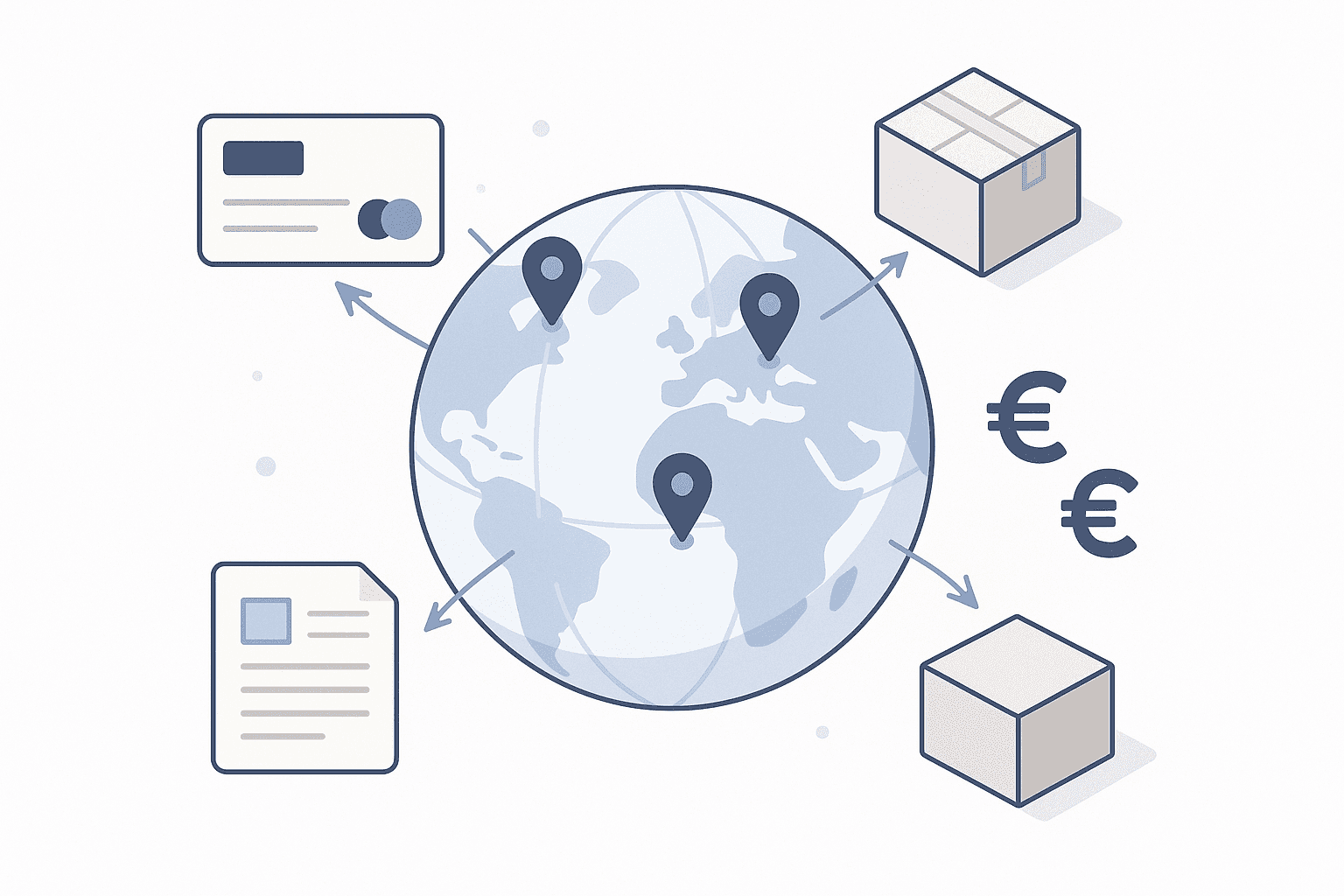
Adopt a unified cross-border infrastructure that centralizes localization, compliance, and logistics to launch in multiple countries from one hub. Configure local currencies, pricing, and payment methods; calculate and collect duties and taxes at checkout; and use duty-paid shipping with regional carriers to avoid customs delays. Manage orders, returns, and payouts in a central dashboard while operating under a single legal entity. Validate demand with staged rollouts, then scale inventory and marketing once operational metrics meet targets.

Explanation / Context

International selling traditionally required local entities, warehouses, and tax registrations. These requirements created high upfront costs and slowed expansion.

Modern cross-border infrastructure removes these barriers by centralizing payments, compliance, and logistics.

How It Works

  1. Integrate a cross-border platform

  2. Localize pricing, currency, and payment methods

  3. Calculate duties and taxes at checkout

  4. Fulfill orders using international or regional logistics partners

  5. Track orders and payouts centrally

Real-World Examples

A DTC brand launches in the UAE, UK, and EU within weeks. Customers pay in local currency using local payment methods and receive orders in 2–4 days.

Common Mistakes

  • Relying only on international card payments

  • Using DDU shipping

  • Launching without demand testing

Why This Matters for eCommerce Brands

Proper localization increases conversion rates, reduces payment failures, and improves customer trust.

How SellAbroad Solves This

SellAbroad provides unified infrastructure for cross-border selling, including localized checkout, local payment methods, duty-inclusive shipping, and centralized order management. Brands use SellAbroad to launch and scale internationally while operating from a single legal entity.

Explanation / Context

International selling traditionally required local entities, warehouses, and tax registrations. These requirements created high upfront costs and slowed expansion.

Modern cross-border infrastructure removes these barriers by centralizing payments, compliance, and logistics.

How It Works

  1. Integrate a cross-border platform

  2. Localize pricing, currency, and payment methods

  3. Calculate duties and taxes at checkout

  4. Fulfill orders using international or regional logistics partners

  5. Track orders and payouts centrally

Real-World Examples

A DTC brand launches in the UAE, UK, and EU within weeks. Customers pay in local currency using local payment methods and receive orders in 2–4 days.

Common Mistakes

  • Relying only on international card payments

  • Using DDU shipping

  • Launching without demand testing

Why This Matters for eCommerce Brands

Proper localization increases conversion rates, reduces payment failures, and improves customer trust.

How SellAbroad Solves This

SellAbroad provides unified infrastructure for cross-border selling, including localized checkout, local payment methods, duty-inclusive shipping, and centralized order management. Brands use SellAbroad to launch and scale internationally while operating from a single legal entity.

FAQ

### What is a centralized cross-border stack, and how does it simplify multi-country launches?

It unifies localization, payments, duty and tax calculation, shipping, compliance, and order operations into one system, removing separate country builds and reducing integrations, reconciliations, and maintenance.

### Do I need local entities to start selling in new countries?

Often no. A single legal entity can sell using cross-border compliance, tax collection and remittance, and import facilitation, but verify destination regulations, product restrictions, labeling, and thresholds.

### How should I handle duties and taxes to avoid customs delays?

Calculate landed costs at checkout and collect them upfront (DDP), map accurate HS codes and country of origin, and use carriers that support electronic customs data and predictable clearance.

### Which metrics show my cross-border setup is ready to scale?

Look for stable conversion rates, high payment approval, low refund and fraud rates, on-time delivery within SLA, low WISMO and return rates, and accurate multi-currency reconciliation.
