How to localize my store for global audiences
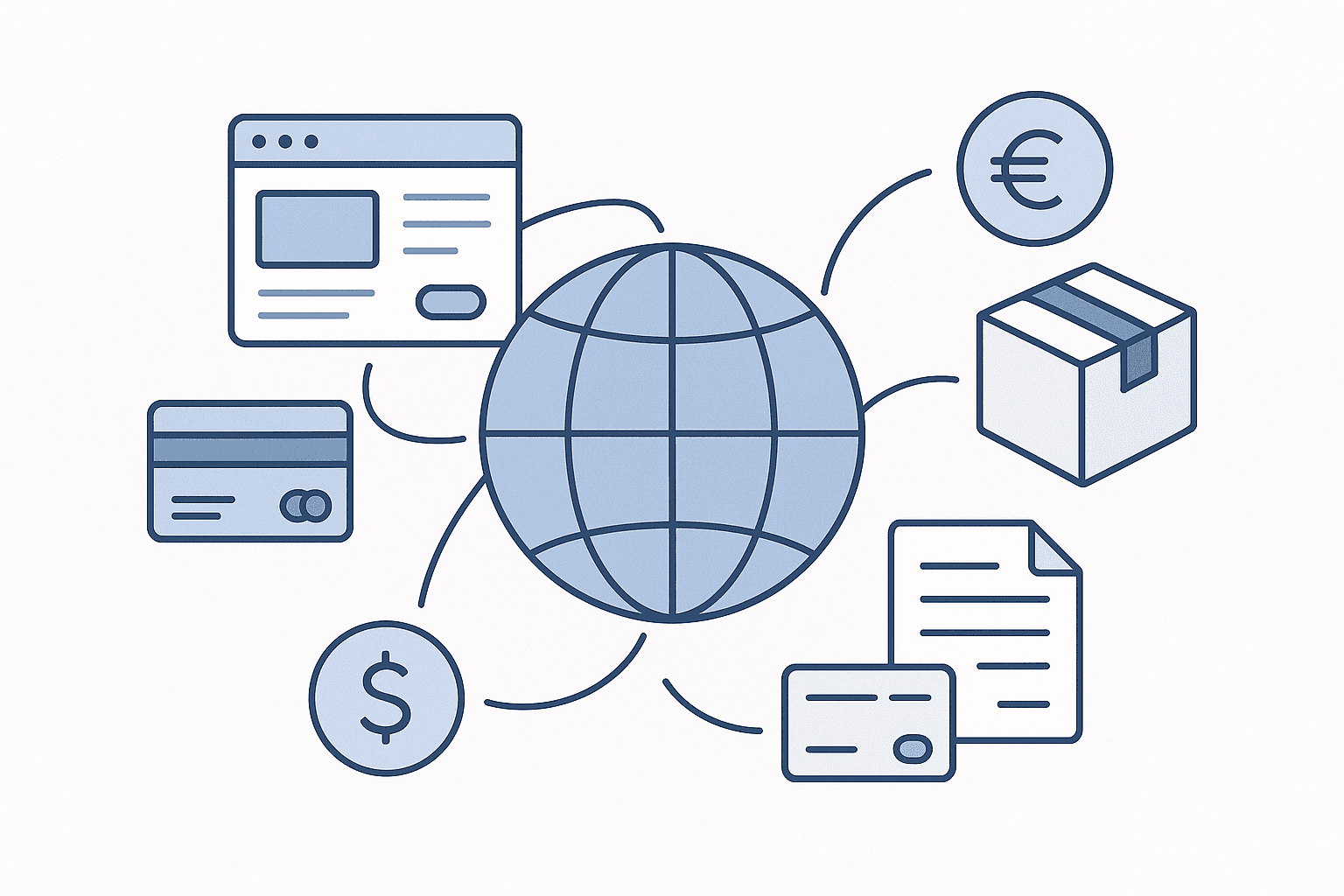
Localizing a store for global audiences is best achieved by using cross-border infrastructure that centralizes payments, compliance, and logistics. Configure localized pricing and currencies, enable locally preferred payment methods, and calculate duties and taxes at checkout to display guaranteed landed costs. Use integrated international or regional fulfillment partners and provide clear delivery estimates. Centralize order tracking, tax records, and payouts, allowing multi-country operations from a single entity while improving conversion and payment acceptance.
FAQ
### What is cross-border infrastructure and why does it matter for localization?
It is a unified layer for payments, tax, compliance, and logistics that localizes checkout while centralizing operations. It enables local currencies and payment methods, calculates duties and taxes, supports compliant shipping, and consolidates payouts and reporting, reducing complexity.
### Can I sell internationally without setting up foreign subsidiaries?
Often yes. A cross-border setup can collect and remit taxes, process local payments, and manage compliance while you operate from one legal entity. Confirm market-specific regulations, thresholds, restricted products, and invoicing requirements.
### How do I show accurate landed costs at checkout?
Use product classification (HS codes), item values, origin, and destination to compute duties, taxes, and fees in real time. Collect these charges at checkout (DDP) and present a guaranteed total, with delivery estimates based on selected shipping options.
### How can I centralize payouts, taxes, and order tracking across countries?
Use a platform that aggregates multi-currency payments into unified payouts, reconciles duties and taxes per order, and surfaces shipment statuses in one dashboard. Export auditable records for finance and regulatory reporting.
