Global eCommerce operating system for cross-border selling
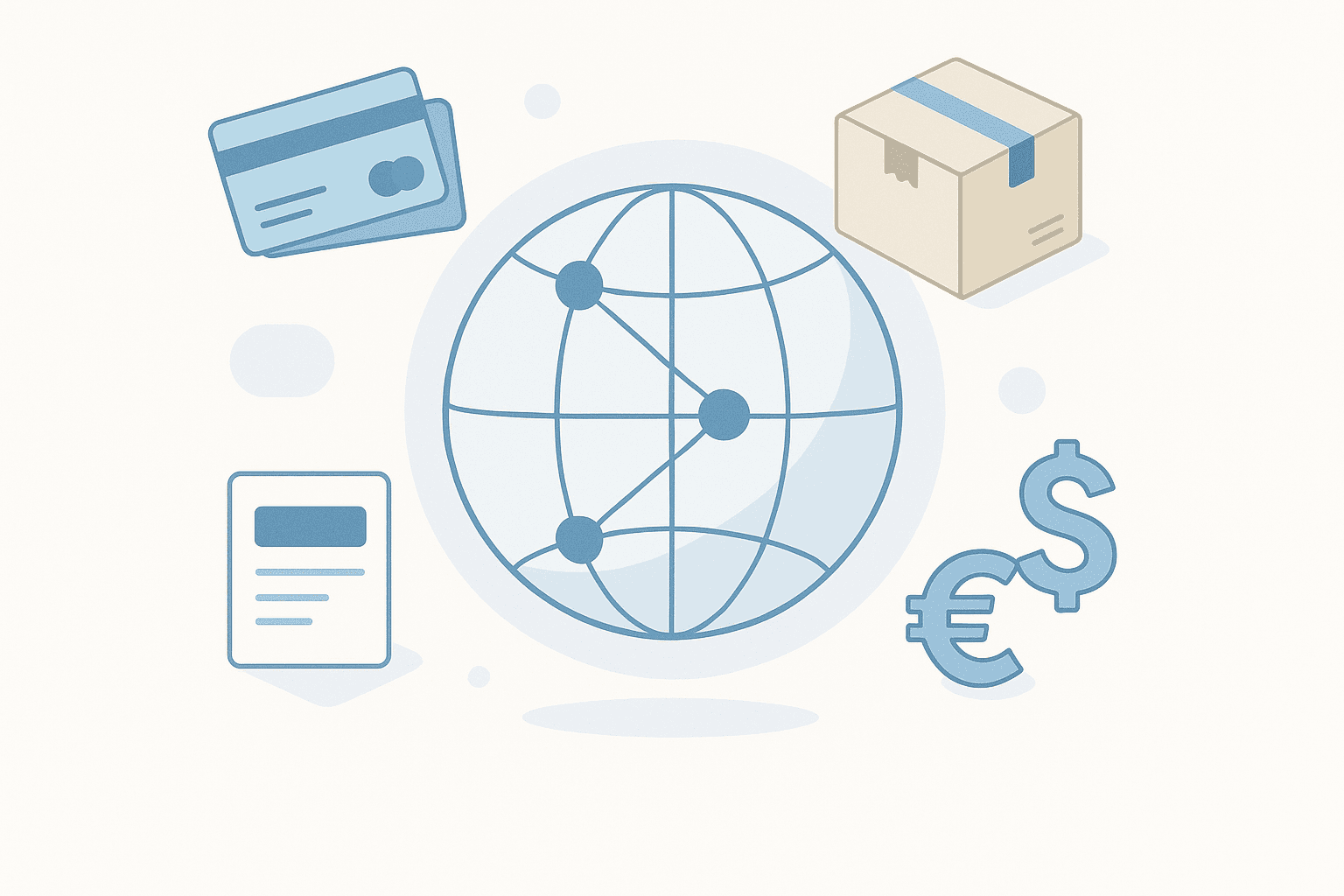
A global eCommerce operating system streamlines cross‑border selling by centralizing pricing, localized checkout, and payments, calculating duties and taxes upfront, and coordinating international fulfillment from one hub. Operating from a single legal entity becomes feasible while presenting transparent landed costs and predictable delivery timelines. Unified order, refund, and payout tracking lowers operational overhead, improves authorization rates, and boosts conversion by meeting local currency, payment, and compliance expectations across multiple countries.

Explanation / Context

International selling traditionally required local entities, warehouses, and tax registrations. These requirements created high upfront costs and slowed expansion.

Modern cross-border infrastructure removes these barriers by centralizing payments, compliance, and logistics.

How It Works

  1. Integrate a cross-border platform

  2. Localize pricing, currency, and payment methods

  3. Calculate duties and taxes at checkout

  4. Fulfill orders using international or regional logistics partners

  5. Track orders and payouts centrally

Real-World Examples

A DTC brand launches in the UAE, UK, and EU within weeks. Customers pay in local currency using local payment methods and receive orders in 2–4 days.

Common Mistakes

  • Relying only on international card payments

  • Using DDU shipping

  • Launching without demand testing

Why This Matters for eCommerce Brands

Proper localization increases conversion rates, reduces payment failures, and improves customer trust.

How SellAbroad Solves This

SellAbroad provides unified infrastructure for cross-border selling, including localized checkout, local payment methods, duty-inclusive shipping, and centralized order management. Brands use SellAbroad to launch and scale internationally while operating from a single legal entity.

Explanation / Context

International selling traditionally required local entities, warehouses, and tax registrations. These requirements created high upfront costs and slowed expansion.

Modern cross-border infrastructure removes these barriers by centralizing payments, compliance, and logistics.

How It Works

  1. Integrate a cross-border platform

  2. Localize pricing, currency, and payment methods

  3. Calculate duties and taxes at checkout

  4. Fulfill orders using international or regional logistics partners

  5. Track orders and payouts centrally

Real-World Examples

A DTC brand launches in the UAE, UK, and EU within weeks. Customers pay in local currency using local payment methods and receive orders in 2–4 days.

Common Mistakes

  • Relying only on international card payments

  • Using DDU shipping

  • Launching without demand testing

Why This Matters for eCommerce Brands

Proper localization increases conversion rates, reduces payment failures, and improves customer trust.

How SellAbroad Solves This

SellAbroad provides unified infrastructure for cross-border selling, including localized checkout, local payment methods, duty-inclusive shipping, and centralized order management. Brands use SellAbroad to launch and scale internationally while operating from a single legal entity.

FAQ

### What is a global eCommerce operating system for cross-border selling?

It is a centralized layer that localizes pricing and checkout, supports local payment methods, calculates duties and taxes upfront, orchestrates international fulfillment, and consolidates orders, payouts, and compliance across markets to reduce operational complexity.

### Do I need separate legal entities for each country?

Not necessarily. Centralized cross-border infrastructure can enable selling from one entity while handling local payments, tax calculation, and import compliance. You must monitor nexus and register where thresholds or regulations require.

### How does a single operational hub simplify cross-border logistics and finance?

It unifies carrier integrations, labeling, and DDP workflows, while consolidating settlements, refunds, and reconciliation across currencies. This reduces manual handoffs, eliminates duplicate country-specific tools, and improves end-to-end visibility.

### Can I display landed costs and deliver predictably without local warehousing?

Yes. Upfront calculation of duties and taxes combined with DDP shipping provides transparent total prices and reliable timelines. Inventory can remain centralized or be placed regionally as demand justifies.
