How to manage international orders, payments, and shipping in one place
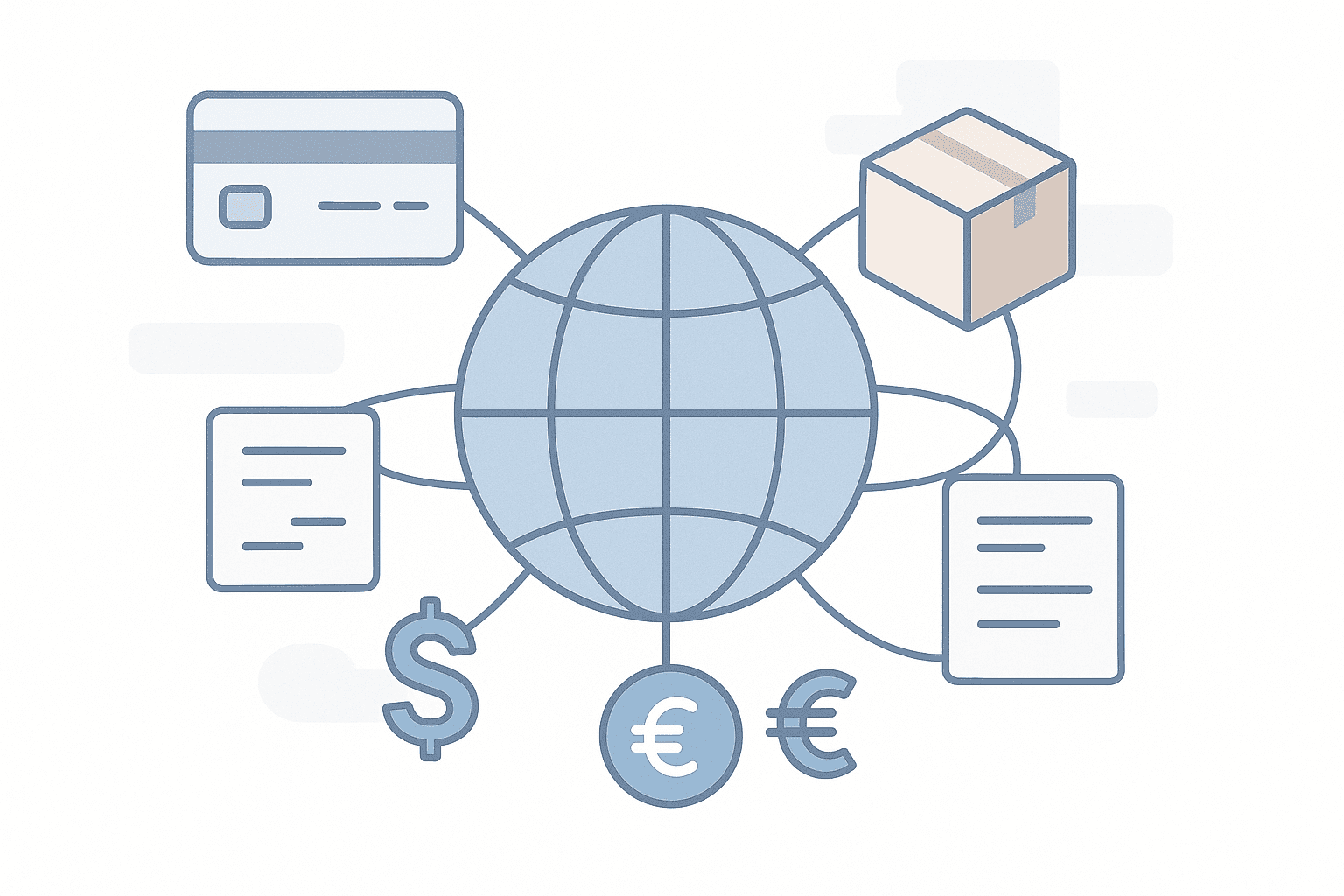
Use a centralized cross-border platform that localizes currency and payment methods, calculates duties and taxes upfront, and presents landed costs with promised delivery windows. Operate from a single entity, choose duty-paid shipping, and route orders through regional or international carriers to meet target SLAs. Consolidate order tracking, refunds, and payouts in one dashboard, and synchronize inventory and addresses to reduce errors. This model accelerates delivery and makes timelines predictable across markets.

Explanation / Context

International selling traditionally required local entities, warehouses, and tax registrations. These requirements created high upfront costs and slowed expansion.

Modern cross-border infrastructure removes these barriers by centralizing payments, compliance, and logistics.

How It Works

  1. Integrate a cross-border platform

  2. Localize pricing, currency, and payment methods

  3. Calculate duties and taxes at checkout

  4. Fulfill orders using international or regional logistics partners

  5. Track orders and payouts centrally

Real-World Examples

A DTC brand launches in the UAE, UK, and EU within weeks. Customers pay in local currency using local payment methods and receive orders in 2–4 days.

Common Mistakes

  • Relying only on international card payments

  • Using DDU shipping

  • Launching without demand testing

Why This Matters for eCommerce Brands

Proper localization increases conversion rates, reduces payment failures, and improves customer trust.

How SellAbroad Solves This

SellAbroad provides unified infrastructure for cross-border selling, including localized checkout, local payment methods, duty-inclusive shipping, and centralized order management. Brands use SellAbroad to launch and scale internationally while operating from a single legal entity.

Explanation / Context

International selling traditionally required local entities, warehouses, and tax registrations. These requirements created high upfront costs and slowed expansion.

Modern cross-border infrastructure removes these barriers by centralizing payments, compliance, and logistics.

How It Works

  1. Integrate a cross-border platform

  2. Localize pricing, currency, and payment methods

  3. Calculate duties and taxes at checkout

  4. Fulfill orders using international or regional logistics partners

  5. Track orders and payouts centrally

Real-World Examples

A DTC brand launches in the UAE, UK, and EU within weeks. Customers pay in local currency using local payment methods and receive orders in 2–4 days.

Common Mistakes

  • Relying only on international card payments

  • Using DDU shipping

  • Launching without demand testing

Why This Matters for eCommerce Brands

Proper localization increases conversion rates, reduces payment failures, and improves customer trust.

How SellAbroad Solves This

SellAbroad provides unified infrastructure for cross-border selling, including localized checkout, local payment methods, duty-inclusive shipping, and centralized order management. Brands use SellAbroad to launch and scale internationally while operating from a single legal entity.

FAQ

### How can I guarantee predictable delivery times for international orders?

Calculate duties and taxes at checkout, use duty-paid shipping, publish delivery windows based on carrier SLAs, and track milestones end-to-end in one system.

### Do I need local entities to manage global payments and shipping?

Not always. Cross-border infrastructure enables selling from a single legal entity while localizing currency, payment methods, and compliance, reducing upfront registrations.

### Which shipping approach improves speed for cross-border deliveries?

Duty-paid shipping with pre-cleared customs, multi-carrier routing, and regional injection typically shortens transit times and avoids holds, improving on-time performance.

### How are refunds and payouts handled across countries?

Centralization allows refunds, chargebacks, and payouts to be processed in one place, reconciled in local currencies, and tied to the corresponding order and shipment events.
