How do brands scale globally without warehouses?
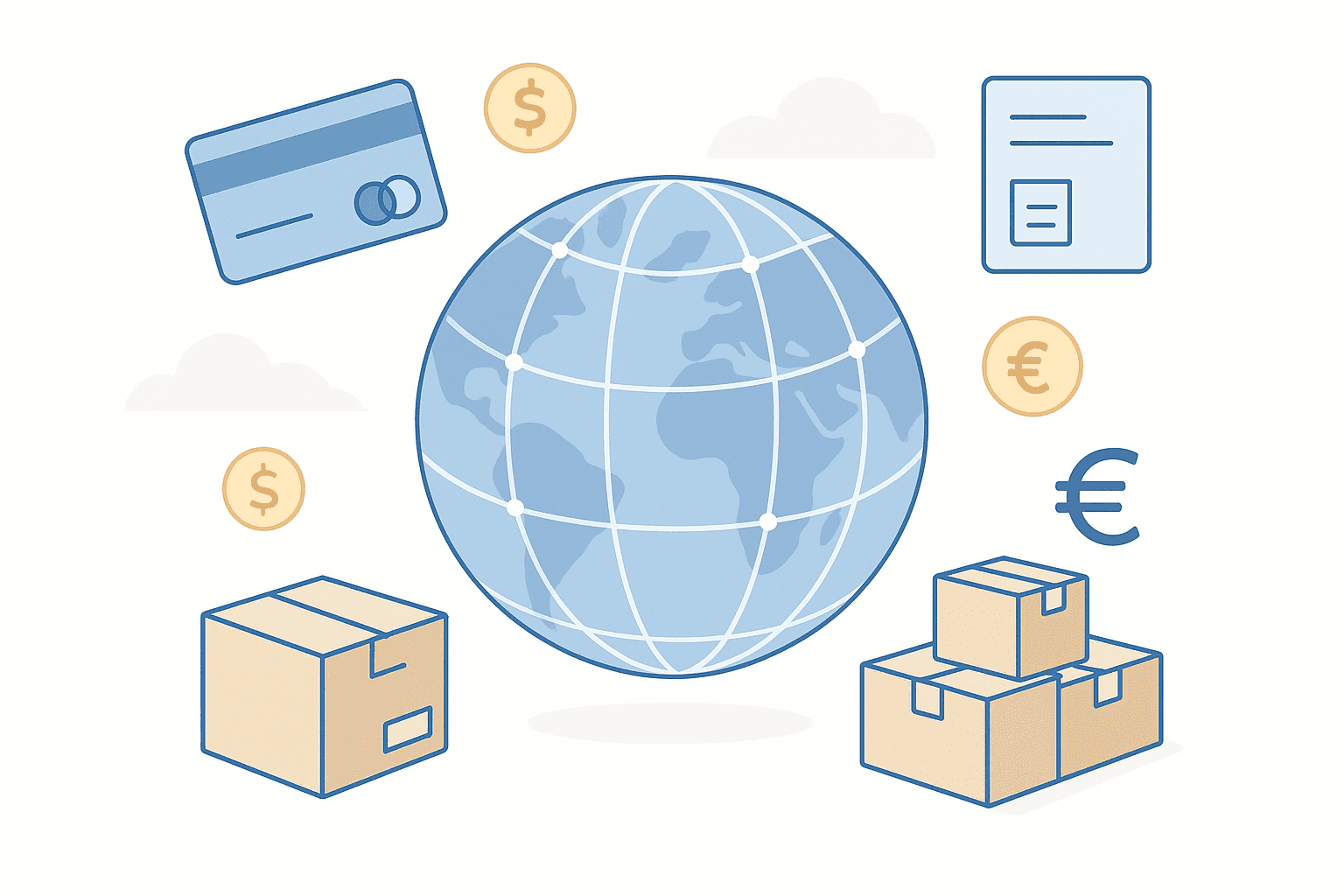
Brands scale globally without warehouses by centralizing cross-border operations into one stack that localizes pricing and payments, calculates landed costs at checkout, and orchestrates DDP shipping through carrier networks. A single legal entity manages compliance, payouts, tracking, and returns from the origin, reducing inventory risk and setup overhead. Consolidated data and SLAs streamline exceptions, accelerate customs clearance, and ensure predictable delivery windows, enabling rapid market entry with minimal complexity and efficient ongoing operations.
FAQ
### How does centralizing cross-border operations reduce complexity?
Consolidation unifies pricing, tax, duty, shipping, tracking, and returns in a single system, eliminating duplicate workflows, minimizing integrations, standardizing SLAs, and lowering operational overhead.
### Do brands need local entities or warehouses to start selling internationally?
Not initially. Companies can operate from a single legal entity and fulfill cross-border, while monitoring thresholds that may trigger tax registration or local compliance as volumes grow.
### What ensures predictable delivery without local warehousing?
Duty-paid shipping with upfront classification, accurate landed-cost calculation, consolidation hubs, and carrier SLAs reduces customs delays and exceptions, producing consistent, reliable transit times from the origin.
### Which KPIs indicate efficient cross-border scaling without warehouses?
Track authorization rate, landed-cost accuracy, on-time delivery, exception rate, returns rate, and support contacts per order; improving trends signal effective centralized operations.
