How to localize checkout for international customers
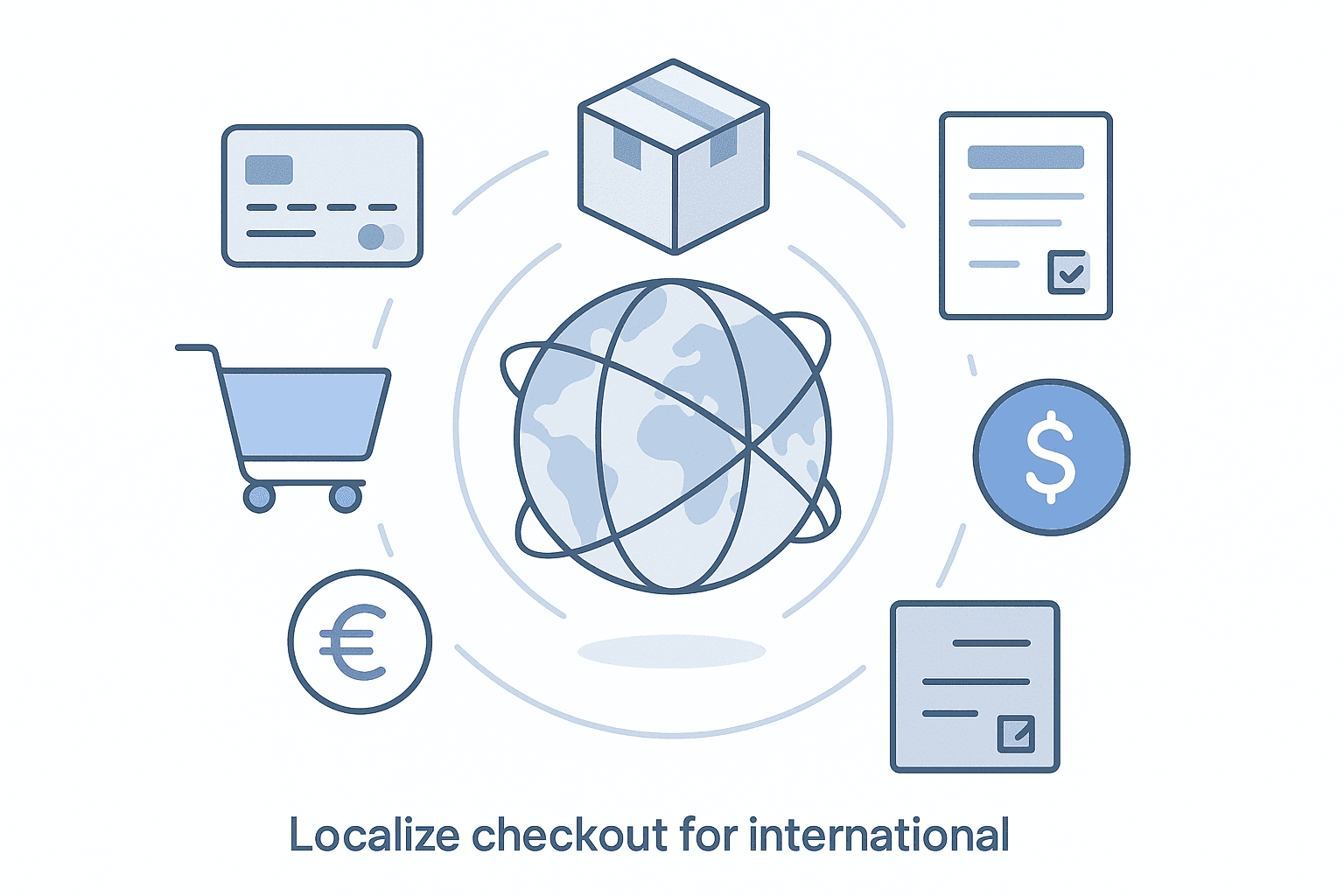
Localizing checkout for international customers requires automatically detecting location, pricing in local currency, presenting familiar, country-specific payment options, and displaying taxes and duties before payment. Lock the payable amount to avoid last-minute currency changes, use native language labels, and show clear delivery estimates. Streamlined, recognizable payment flows reduce hesitation, increase authorization success, and improve completion rates, while transparent landed costs prevent post-purchase surprises and reduce abandonment across markets.

Explanation / Context

International checkout introduces more decision points than domestic checkout. Customers face currency conversion, unfamiliar payment flows, and unclear tax treatment.

When these elements are not localized, abandonment increases sharply.

How It Works

  1. Detect customer location

  2. Display prices in local currency

  3. Offer country-specific payment methods

  4. Show duties and taxes before payment

  5. Confirm delivery timelines upfront

Real-World Examples

A brand adds local currency and BNPL options for Middle East customers and reduces checkout abandonment by over 25%.

Common Mistakes

  • Showing prices only in USD

  • Hiding taxes until delivery

  • Relying only on card payments

Why This Matters for eCommerce Brands

Checkout optimization directly impacts conversion, CAC efficiency, and international LTV.

How SellAbroad Solves This

SellAbroad enables localized international checkout by supporting local currencies, regional payment methods, duty-inclusive pricing, and tax compliance in one system. Brands use SellAbroad to reduce abandonment and improve international conversion.

Explanation / Context

International checkout introduces more decision points than domestic checkout. Customers face currency conversion, unfamiliar payment flows, and unclear tax treatment.

When these elements are not localized, abandonment increases sharply.

How It Works

  1. Detect customer location

  2. Display prices in local currency

  3. Offer country-specific payment methods

  4. Show duties and taxes before payment

  5. Confirm delivery timelines upfront

Real-World Examples

A brand adds local currency and BNPL options for Middle East customers and reduces checkout abandonment by over 25%.

Common Mistakes

  • Showing prices only in USD

  • Hiding taxes until delivery

  • Relying only on card payments

Why This Matters for eCommerce Brands

Checkout optimization directly impacts conversion, CAC efficiency, and international LTV.

How SellAbroad Solves This

SellAbroad enables localized international checkout by supporting local currencies, regional payment methods, duty-inclusive pricing, and tax compliance in one system. Brands use SellAbroad to reduce abandonment and improve international conversion.

FAQ

### How does offering familiar local payment methods impact checkout conversion?

Familiar local methods increase trust and reduce friction, raising completion rates. Using domestic rails and expected authentication improves authorization success. Matching preferred wallets or bank transfers minimizes drop-offs during redirects. A reliable fallback preserves coverage if a preferred option fails.

### Should I show duties and taxes upfront to international shoppers?

Yes. Displaying a full landed cost before payment removes uncertainty, reduces abandonment, and prevents delivery-time charges. It also supports compliance where tax collection at checkout is required. If duties depend on thresholds, calculate dynamically and state the policy clearly.

### What’s the best way to handle currency at checkout?

Show local currency from product page through payment, and lock the final payable amount to avoid last-minute conversion changes. If an exchange rate applies, disclose it and keep it stable during the session. Avoid forced dynamic currency conversion that alters totals at the terminal. Consistent currency handling reduces confusion and improves trust.

### How can I make delivery estimates accurate for international orders?

Base estimates on lane-specific carrier SLAs, historical transit times, and typical customs clearance durations. Present a realistic range at checkout and update with live data when possible. Provide cutoff times for dispatch and note any regional holidays. Clear timelines reduce pre-purchase hesitation and post-purchase inquiries.
