Risks of international expansion for DTC brands
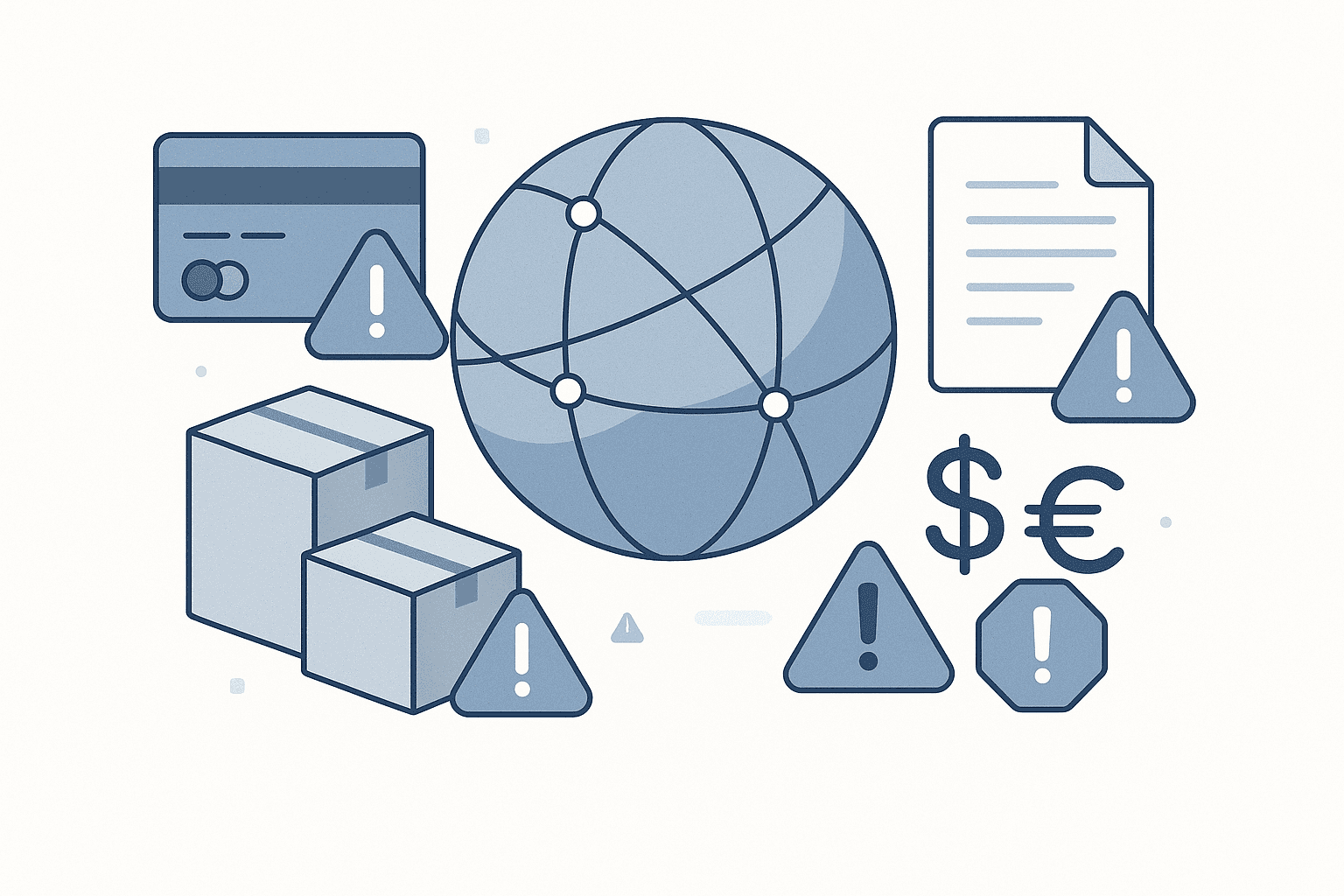
International expansion exposes DTC brands to operational sprawl, duplicated systems, compliance gaps, tax and FX errors, payment failures, and weak country-level visibility. Fragmented vendor stacks complicate reporting and raise costs, slowing response to issues. A centralized cross-border infrastructure applies country rules automatically, unifies data, and standardizes integrations for payments, logistics, and taxes. This simplification reduces headcount growth, strengthens governance, improves risk control and performance monitoring, and enables faster, lower-friction entry into new markets with consistent customer experiences.

Explanation / Context

Global expansion often leads brands to add new tools, teams, and workflows for each country. Over time, this creates operational sprawl.

A centralized global eCommerce stack replaces fragmented systems with a single operating layer.

How It Works

  1. Use one integration for payments, logistics, and taxes

  2. Apply country-specific rules automatically

  3. Centralize order, payout, and performance data

  4. Scale into new markets without adding new vendors

  5. Monitor performance by region from one dashboard

Real-World Examples

A DTC brand expands from 3 to 12 countries without hiring local teams by consolidating payments, shipping, and compliance into one platform.

Common Mistakes

  • Adding tools market by market

  • Hiring local teams too early

  • Lacking country-level visibility

Why This Matters for Scaling Brands

Centralization lowers operational costs, reduces risk, and improves decision-making speed.

How SellAbroad Solves This

SellAbroad provides a unified infrastructure for cross-border eCommerce, combining payments, shipping, tax handling, and reporting into one system. Brands use SellAbroad to scale internationally without increasing headcount or operational complexity.

Explanation / Context

Global expansion often leads brands to add new tools, teams, and workflows for each country. Over time, this creates operational sprawl.

A centralized global eCommerce stack replaces fragmented systems with a single operating layer.

How It Works

  1. Use one integration for payments, logistics, and taxes

  2. Apply country-specific rules automatically

  3. Centralize order, payout, and performance data

  4. Scale into new markets without adding new vendors

  5. Monitor performance by region from one dashboard

Real-World Examples

A DTC brand expands from 3 to 12 countries without hiring local teams by consolidating payments, shipping, and compliance into one platform.

Common Mistakes

  • Adding tools market by market

  • Hiring local teams too early

  • Lacking country-level visibility

Why This Matters for Scaling Brands

Centralization lowers operational costs, reduces risk, and improves decision-making speed.

How SellAbroad Solves This

SellAbroad provides a unified infrastructure for cross-border eCommerce, combining payments, shipping, tax handling, and reporting into one system. Brands use SellAbroad to scale internationally without increasing headcount or operational complexity.

FAQ

### What makes cross-border expansion risky for DTC brands?

Risks include operational sprawl, fragmented tooling, compliance exposure, tax and FX errors, payment failures, logistics complexity, and poor country-level visibility. These factors increase costs, create data silos, and slow decision-making, raising the likelihood of errors and service disruptions.

### How does a centralized cross-border stack reduce compliance and tax risk?

It enforces country-specific rules automatically, validates data at checkout and fulfillment, consolidates records for auditability, and standardizes reporting. Unified workflows reduce manual overrides and inconsistencies, lowering error rates across VAT, duties, invoicing, and regulatory requirements.

### Can I launch new countries without adding new vendors or teams?

Yes. A single operating layer with prebuilt integrations and centralized configurations enables applying local rules per market while keeping data, payments, taxes, and logistics unified, reducing vendor count and limiting headcount growth.

### What metrics should I monitor by country to manage risk?

Track authorization rates, chargebacks, tax error rates, landed cost accuracy, delivery SLA adherence, cancellations and returns, refund timelines, and contribution margin by market to identify issues early and allocate resources effectively.
